
VAPT vs Penetration Testing: The Actual Difference
VAPT vs Penetration Testing
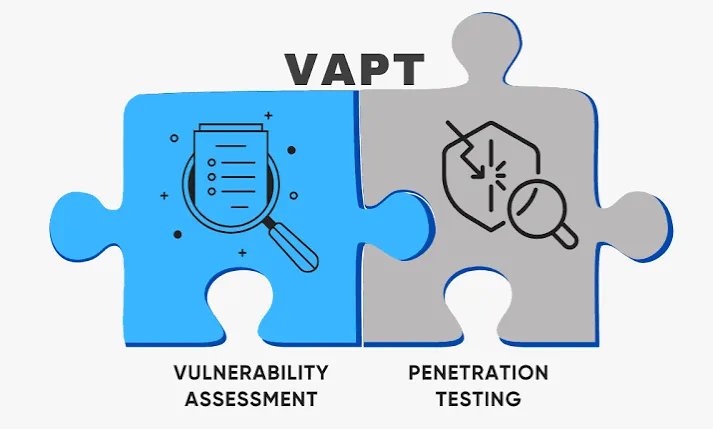
Penetration testing is one half of VAPT. Vulnerability assessment finds and lists weaknesses across a broad surface using mostly automated scanning. Penetration testing exploits a narrow set of those weaknesses manually to prove real impact. VAPT is the combined engagement that does both, which is why the terms get used interchangeably and should not be.
This confusion costs Indian companies real money. Vendors quote "VAPT" and deliver a Nessus export. Buyers pay penetration testing rates for a scan. Knowing the difference is the first thing we teach in the VAPT training program, and it is the first thing that separates a tester from a scanner operator. If you are new to the term entirely, start with what is VAPT.
The short version
| Vulnerability Assessment | Penetration Testing | |
|---|---|---|
| Question it answers | What weaknesses exist? | What can an attacker actually do? |
| Primary method | Automated scanning | Manual exploitation |
| Coverage | Broad, everything in scope | Narrow, deep on what matters |
| Output | Ranked list of findings | Proven attack chains with evidence |
| False positives | Common, needs triage | Zero by definition |
| Proves impact? | No | Yes |
| Typical duration | Hours to a few days | Days to weeks |
| Skill required | Tool operation and triage | Exploitation and chaining |
| Repeatable? | Yes, run it weekly | Not economically, run it periodically |
| Relative cost | Low | High |
What a vulnerability assessment actually produces
You point a scanner at a scope. Nessus, OpenVAS, Nikto, or a cloud posture tool. It fingerprints services, compares versions against a vulnerability database, checks configurations, and returns findings ranked by CVSS.
A typical mid-size network assessment returns several hundred findings. That volume is the point and also the problem. Coverage is genuinely broad: every host, every port, every outdated library. But the output is a claim, not a proof.
A scanner will tell you a server runs a library version with a known remote code execution CVE. It will not tell you whether that code path is reachable, whether a WAF blocks it, whether the service is even internet-facing, or whether exploiting it gets you anything worth having. Somewhere between 30% and 60% of raw scanner output in a real engagement is noise, depending on the tool and the environment.
That triage step, deciding which of 400 findings deserves a human hour, is the actual skill in vulnerability assessment. Running the scanner is not.
What a penetration test actually produces
A penetration test starts roughly where triage ends. A human takes the findings that survived, plus the things no scanner can see, and tries to break in.
The things no scanner can see are usually where the report earns its fee: business logic flaws, broken access control between two legitimate users, a password reset flow that can be hijacked, a checkout that accepts a negative quantity. No signature exists for "this application lets user A read user B's invoices". A human has to notice it.
The output is a chain, not a list. Not "SQL injection present in the login parameter" but "SQL injection in the login parameter allowed extraction of the full user table including password hashes, three of which cracked in under a minute, one of which belonged to an administrator whose credentials also worked on the internal VPN."
That second sentence is what gets a budget approved. The first one gets filed.
Why the distinction decides your budget
This is the practical consequence, and it is worth being blunt about.
A CISO walks into a board meeting with 400 medium-severity scanner findings. Nothing happens. The findings are abstract, the count is overwhelming, and there is no way to prioritise between them.
The same CISO walks in with one slide showing 12,000 customer records extracted in 90 minutes through a single unpatched service, with screenshots. Remediation gets funded that week.
Vulnerability assessment measures your attack surface. Penetration testing measures your actual exposure. Those are different numbers and organisations consistently confuse them.
Where VAPT sits
VAPT as a term is far more common in India and the Middle East than in the US or Europe, where the two services are usually sold separately. The combined framing exists mostly because of how compliance works here.
CERT-In directions, RBI cyber security frameworks, SEBI CSCRF and ISO 27001 all require some form of periodic technical security assessment. Auditors want breadth to demonstrate coverage and depth to demonstrate rigour. So the market packaged both and called it VAPT. Detail on the regulatory side is in CERT-In VAPT requirements.
A properly scoped VAPT engagement runs both in sequence: assessment for coverage, then testing for proof, then a report that separates the two clearly so the reader knows which findings were verified and which were flagged.
How to tell what a vendor is actually selling you
If you are buying, these questions separate real penetration testing from a scan with a cover page.
- "How many person-days of manual testing are included?" A scan is measured in hours of compute. A penetration test is measured in person-days. If the vendor cannot answer this, there is no manual testing in the quote.
- "Will the report contain proof of exploitation?" Screenshots, extracted data samples, request and response pairs. Not just a CVSS score and a CVE reference.
- "Are business logic flaws in scope?" No scanner finds these. If the vendor says yes, ask for an example from a previous engagement.
- "Is a retest included after we remediate?" A finding is not closed until someone confirms the fix works. A vendor who charges separately for retest is telling you something.
- "Who is doing the testing?" Names and credentials, not a company logo.
A quote that is dramatically cheaper than the rest of the market is almost always a scan being sold as a test. That is not always the wrong purchase, but you should know which one you are buying. Pricing reality in VAPT cost in India.
Which one does your organisation need?
Run vulnerability assessment continuously. Weekly or monthly, automated, on everything. It is cheap, it catches the unpatched thing that appeared on Tuesday, and it is the only realistic way to maintain coverage across a large estate.
Run penetration testing periodically. Annually at minimum, and after any significant architecture change, new application launch or major release. It is expensive because it is human time, and it is the only way to know what an actual attacker gets.
The common mistake is doing the second and skipping the first. An annual pentest with no scanning in between means you are blind for eleven months. The less common but equally costly mistake is scanning forever and never testing, which means you have a large list and no idea which item on it would end your quarter.
What this means if you are learning
Both skills are hired for, but they are not hired at the same rate. Scanner operation is a commodity. Exploitation and reporting are not.
If you are training for a security role, the sequence that matters is: learn the scanning tools quickly, then spend most of your time on manual exploitation and on writing findings up so a non-technical reader acts on them. The reporting skill in particular is undertaught almost everywhere, and it is the thing that decides whether you stay a junior. See how to write a VAPT report.
Practise this
The difference between assessment and testing is obvious once you have done both, and abstract until then. Hacklido is our free lab platform. Run a scanner against a target, then try to actually exploit what it reports. The gap between the two is the whole lesson.
For structured coverage of both halves with a live mentor, the TCVE VAPT program runs three months.
Frequently asked questions
Is VAPT the same as penetration testing?
No. Penetration testing is one component of VAPT. VAPT is a combined engagement that includes both a broad vulnerability assessment and a targeted penetration test.
Can a vulnerability assessment replace a penetration test?
No. An assessment tells you what might be exploitable. Only a penetration test tells you what actually is, and what an attacker reaches after the first successful step.
Which is more expensive, VA or PT?
Penetration testing, substantially. Assessment is largely automated and priced by scope size. Testing is priced by skilled person-days, which is why a real pentest quote is rarely cheap.
How often should each be done?
Vulnerability assessment continuously, weekly or monthly. Penetration testing annually at minimum, plus after major architecture or application changes.
Does compliance require both?
Usually yes. CERT-In, RBI, SEBI CSCRF, ISO 27001 and PCI-DSS all expect periodic technical assessment with evidence of manual testing, not scanner output alone.
Which skill should I learn first?
Learn assessment tooling first because it is quick, then spend most of your time on manual exploitation. Employers pay for the second one.